SAVOIA
technology to make your own
biodiesel
SAVOIA
technology to make your own
biodiesel SAVOIA BD technology offers small
& affordable processors for on-farming and small
business production - You will install a complete oleochemical facility
 SAVOIA
BD JET: our
innovative batch reaction in high
temperature (+80°C), reaches 98-99% of conversion in a
single step
- Note that the
SAVOIA
BD JET: our
innovative batch reaction in high
temperature (+80°C), reaches 98-99% of conversion in a
single step
- Note that the EN14214 std, asks a 96.5% of total esters content
|
|
Multifeedstock
technology to process: crude (not degummed) vegetable oil,
used cooking oil (UCO), and liquid tallow or yellow
grease|
** Since the 2003 year, our innovative process is used in Small Business, On-farming biodiesel production and Home Brewing. The machinery is working in The Netherlands, UK, USA, Korea, Chile, Belgium, Argentina, Australia, Bolivia, Guatemala, Israel, Malaysia, Mexico, Panama, Paraguay, Peru, Portugal, South Africa, Spain,Trinidad & Tobago, Belize. ** Pictures of the first 6000 T/year (1.5 MM Gal/year) biodiesel automated plant, built in Spain 2004, |
Industrial
grade, easy-to-use machinery for
BIODIESEL manufacturing
|
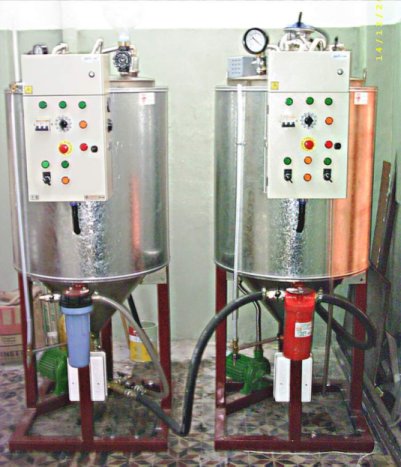 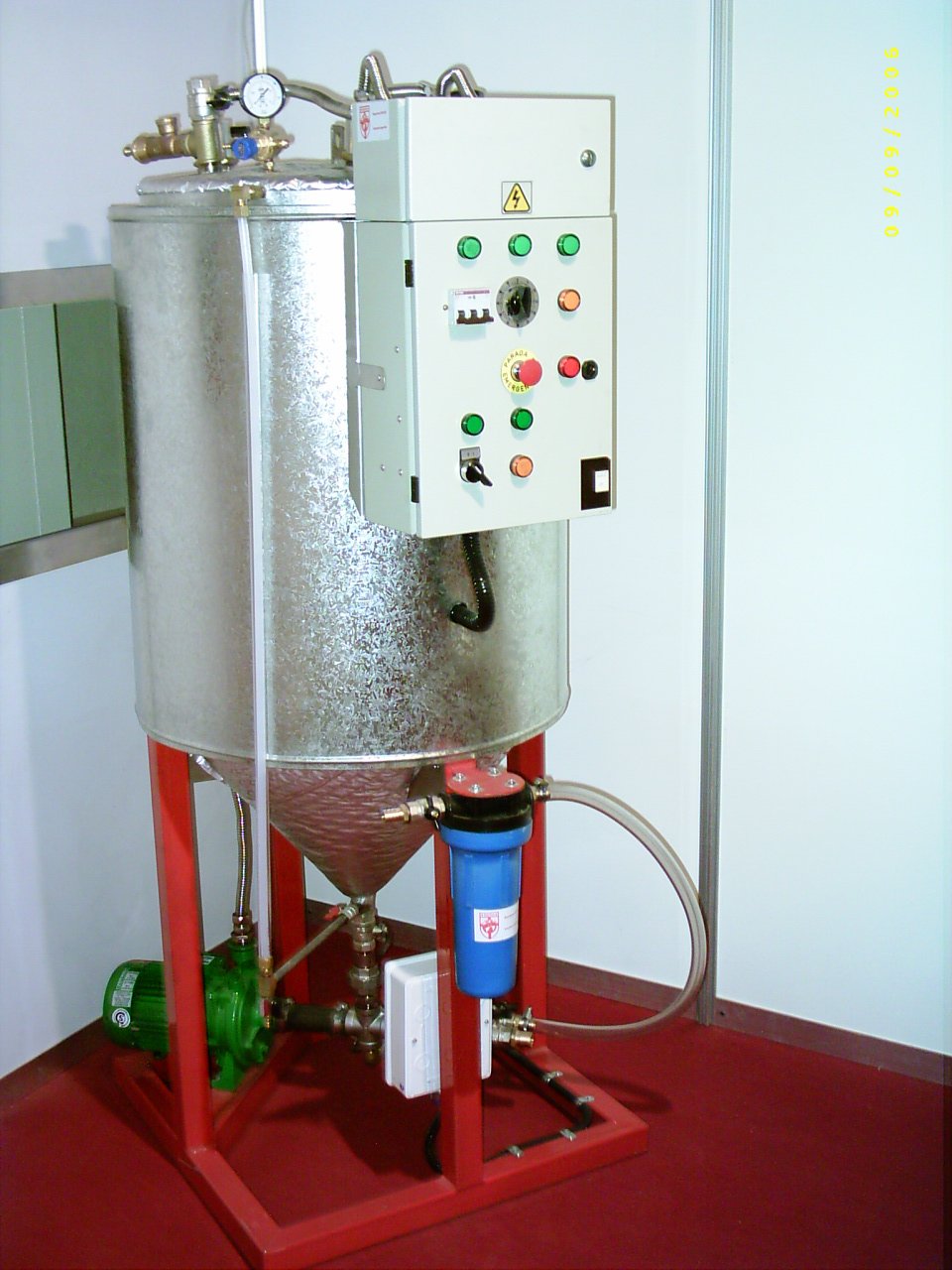 |
 Main Features:
- Stainless Steel bodies and pipes, accept palm oil to be processed - Can process any edible or not edible crude, NOT degummed, virgin vegetable oil - Efficient super-mixing technology, by pump + on-line mixer + heating coil + buffer with anti-vortex device - Reduced energy consumption: 60 Wh/liter, including the veggie oil dewatering - Liquid lye (50% purity) can be used as catalizer (inexpensive sawdust dry "washing" may be used in this case. (Please consult us about) - Average cost of the hot reaction is 0.22-0.25 USD/L, with bulk methanol priced 550 USD/T- Ask this cost calculator here! - No maintenance needed. It exists two mobile parts only. None electronics included. *** On request, we can also supply a handheld REFRACTOMETER to confirm mono and di-glycerides content Expandable from 400 to 5000
L/day (1250 gal/day), with hot gravity settling: With liquid lye, each module can perform up to 15 reactions in 24h. Then, by sending each mixture to external settling tanks (BD4-E type), the reaction processor becomes free to handle successive hot batch reactions. This way, one M50 module may settle, along the 24h, up to 5,000 liters/day(1250 gal/day) of high quality biodiesel. 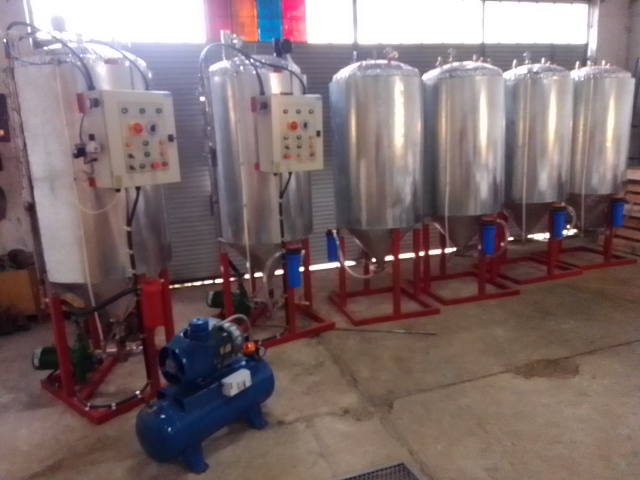 ** NOTE: the 8-9h gravity settling time into the ISOLATED decanters defines the daily production. Each batch reaction, from the oil drying up to the reaction end, takes 60-90 minutes only. - Ask details and prices here!!
Available today: bigger
M16/24/32/40/50 modules with the updated BD4
reactor
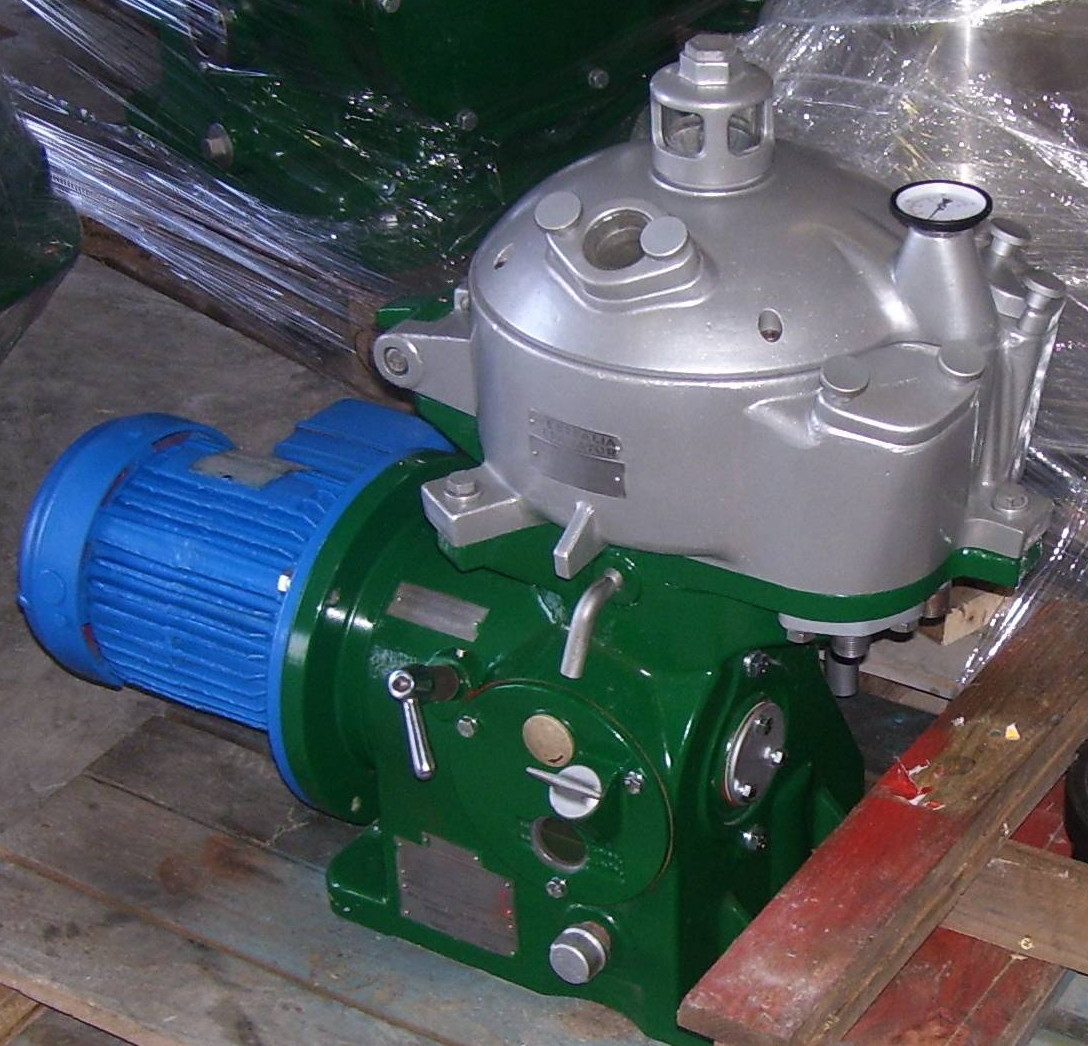
any sterol glucosydes particles from the biodiesel (ideal for cold climate use). Ask details of the SCmax centrifuge here ** See here pictures of the M40 module sold to the Trinidad Tobago country ten years ago
** Ask us the video of
a M8 module (2007), still working, here!
|
|
| Kent Renewable Energy offers solar thermal solutions |
|